


"If everyone leaves, then no one will defend our city, region, and country": how a football referee from Sumy region changed the assistant's flag for a weapon
To be a champion of the country in the 400m run, work as a football referee in national competitions, and during Russia's military invasion, enlist in the ranks of the Ukrainian Armed Forces to defend one's homeland...

Photo by the press service of the UAF
To be a national champion in the 400m run, work as a football referee in national competitions, and during Russia's military invasion join the ranks of the Ukrainian Armed Forces to defend your homeland... This is not a story about an imaginary hero but the real life of 26-year-old Konstantin Ozhioyov, born in Sumy Oblast.
On April 29, during his working visit to Sumy Oblast, President of the Ukrainian Football Association and head of the UAF Coordination Center Andriy Pavelko met with the head of the oblast association Andriy Prokhorovich and the football community of the region. Among those present was Konstantin Ozhioyov, who during a difficult time for Ukraine changed his assistant referee jersey for an automatic rifle.
"What did Andriy Vasylivych say? He wished us all peaceful skies and the fastest possible return of football,"— shares the young man about his impressions from meeting with the head of Ukrainian football. Then he talks about how at 26, he managed to experience such fundamental changes in life.
Konstantin began his sporting career with track and field athletics. His specialization was running short and medium distances. From 2019 to 2021, Ozhioyov won gold medals at the Ukrainian championships in Uzhhorod, Lviv, and Sumy in relay races on distances of 4 x 400m and 4 x 800m. One day, a sportsman was offered to work as an assistant referee for a football match during a district championship, which became life-changing.
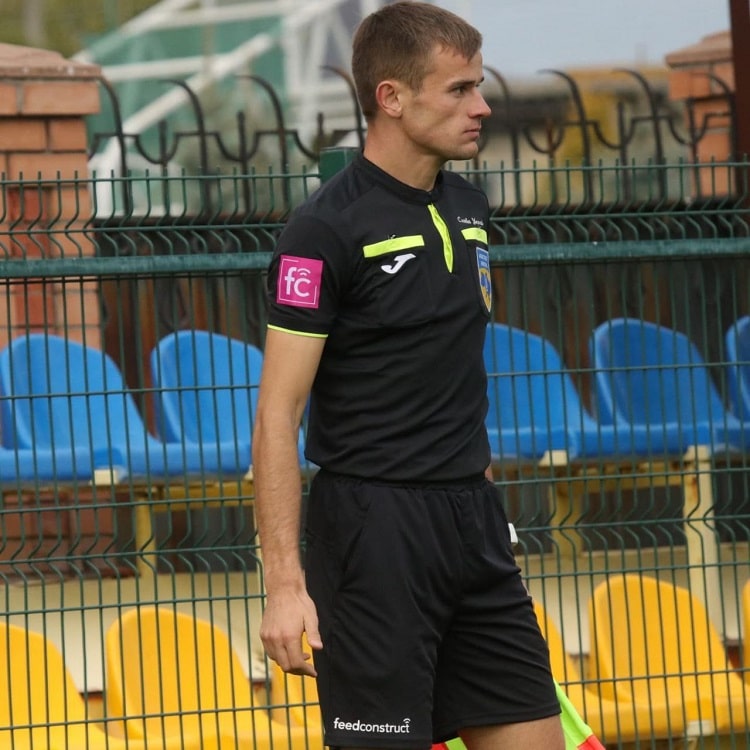
Photo by the press service of UAF
"I liked working in football refereeing. Then came oblast competitions, DYPFL, amateurs and the U-19 championship. On February 25th, I had a match assignment for a first division U-19 game between 'Metalist-1925' and 'Shakhtar'. But on the night of the 24th, my colleague called me unexpectedly to inform me that war had begun."
I woke up at 5.30 am and rushed to the military enlistment office in just 40 minutes. I passed the commission but did not manage to receive an assignment. So for me, the war began with volunteer work. On the 25th, I was already at the artillery school where battles were going on from the very first days,"— Ozhioyov recounts. And shortly after meeting with the commander of a military unit, he was taken into the ranks of the Ukrainian Armed Forces.
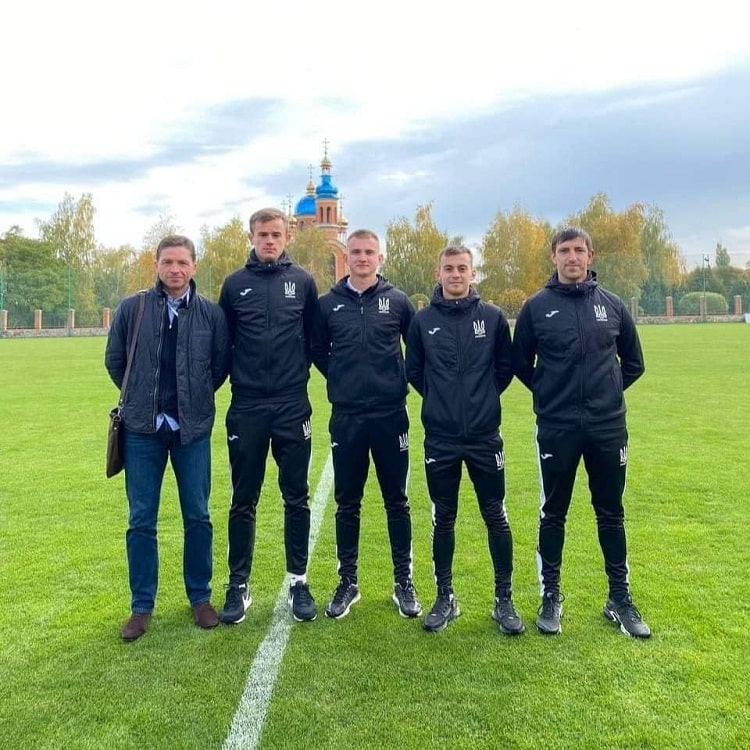
Photo by the press service of UAF
Konstantin never even considered fleeing from war and looking for a safe haven elsewhere, as his parents, relatives, and friends remained in Sumy during the first days of the invasion: "I simply thought that if everyone leaves, no one will defend our city, region, and country. My mother and father immediately said they would not go anywhere. I was very worried about this and therefore decided to be useful for my country right here."
The first weeks of the war were particularly difficult for Ukrainian cities that Russian military units entered. Sumy Oblast settlements, which suffered from crimes committed by Russian occupiers, were no exception.
"On February 24th, Russians passed through Sumy as transit. Dozens of tanks and armored vehicles went through the city center. After that, the enemy closed off the town. It was extremely difficult to get anywhere; even locals were afraid to go out on the streets. Russian forces shelled the artillery school, dropped a 500-kilogram air bomb on a residential building on Romenska Street. I saw that crater: there's a seven-meter-deep and twenty-one-meter-long hole,"— Ozhioyov recounts about life under temporary occupation. And admits that Sumy escaped the fate of Trostyanets, where Russian occupiers committed particularly heinous crimes against civilians. For example, in Trostyanets, one of his colleagues from track and field was beaten to death by Russians, and his body was found only after the city's liberation.
At the beginning of April, Ukrainian defenders expelled Russian occupiers from Sumy Oblast, but despite this fact, there are still hotspots in the region where active warfare continues.
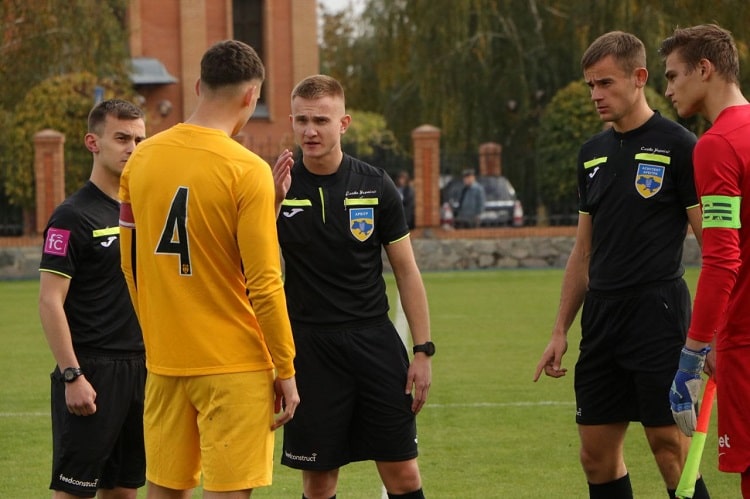
Photo by the press service of UAF
"The Ukrainian Armed Forces pushed Russians back to the border. But, for example, there is a city called Belopillya, which is 50 km from Sumy. Near it lies the border and an entry point. Russian artillery shelled that area every day."
Konstantin also shares his daily routine as a serviceman during wartime: "At eight o'clock — morning muster. After this, we receive tasks for the day and carry them out. There's also training, there are courses of work in the military unit. In the evening, me and other locals are allowed to go home. But they always remind us: 'Boys, war is still going on. Go to bed dressed. At any call, we immediately set off for a mission.'
He hopes that Ukraine will soon celebrate victory, and peace will finally reign in his homeland: "We are winning this war because our side has the truth. It's very sad that people are still dying on the third month of hostilities. But Ukraine is supported by the whole world; Western partners supply us with weapons, planes, and equipment. Russia's stockpile of arms is not endless."
Read also

"By striking Ukrainian cities, Russia is trying to mask its powerlessness." Address by President of Ukraine Volodymyr Zelensky

General Staff of the Ukrainian Armed Forces: operational information regarding the Russian invasion (as of 06:00 04.05.2022)

UAF leaders helped unload a humanitarian shipment of medications that arrived from association partners in Switzerland