


Lucano Luci: "Holding the Ukrainian Championship is the right decision, as football is an integral part of the country's social life"
Since the beginning of the large-scale Russian military aggression, the UEFA Arbitration Committee has assisted match officials and supported their professional qualifications in football associations of European countries.

Photo by Pavel Kubanov
Since the beginning of the large-scale Russian military aggression, the Ukrainian Football Association's Arbitration Committee has assisted match officials and supported their professional qualifications in football associations of European countries. Now almost all referees have returned home and are preparing for the start of the Premier League season 2022/2023.
The head of the Ukrainian Football Association's Arbitration Committee, Luciano Luchi, shares his memories about how the full-scale war began for him and talks about the support that the committee provided and continues to provide to representatives of the referee corps, with what challenges he faces in preparing for the new season and why the upcoming championship will be an image victory for Ukraine on the international stage.
— Luciano, where and how did the war find you? Do you remember the events of February 24 when large-scale Russian military aggression began in Ukraine?
— On Saturday, we returned from winter training sessions held in Antalya together with referees and assistant referees. The next week promised to be busy as Monday required us to assign referees for the 19th round of the Ukrainian Premier League championship, and Tuesday was scheduled for presenting the third VAR van to the press.
On February 24, I woke up to a loud explosion around five in the morning. When I stepped out onto the balcony, I heard another one and saw smoke somewhere near Boryspil, realizing that something very bad was happening. There were rumors circulating about Russia planning an aggressive military invasion into Ukraine. I knew there had been an eight-year war on the Donbas front but could not imagine that they would launch a large-scale attack.
Together with the head of the ethics and fair play committee, Francesco Baranco, we decided to evacuate towards Lviv. However, we only made it as far as Peremohy Avenue where our car got stuck in an endless traffic jam. I opened Google Maps, saw a red line 200 km away from Lviv and realized that reaching there would be impossible.
We decided to turn to the Italian Embassy, which had started gathering families of Italians who were then in Ukraine. The Italian Ambassador organized shelter for us and all these people at his presidential residence where we stayed for three days.
Evacuation was possible thanks to OSCE, UAF, and Chernivtsi Football Association's efforts that organized the transfer from Kyiv and relocation to Moldova. Although I still remember standing in a long queue at 5 am to cross the Dniester bridge.
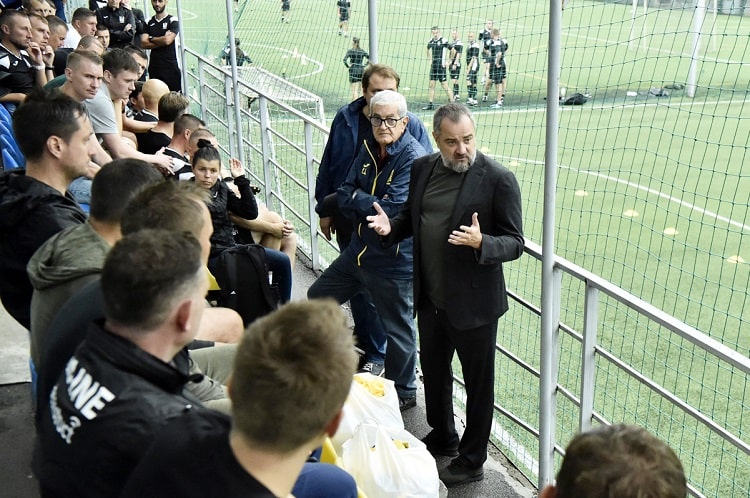
Photo by UAF press service
— What were the sentiments in Italy regarding events unfolding in Ukraine?
— All Italians were against this aggression. Many Italian journalists came to Ukraine, reporting from morning till night about war events. They told stories of people, how the Ukrainian government reacted at that time, what was happening in conflict zones...
February turned into March and April... In all media outlets there was a continuous information marathon about the war in Ukraine. I remember very harsh reactions to photos of killed Ukrainians from Bucha and Irpinia. To say that 99.9% of Italians thought only about how to support Ukraine and help people who needed it most.
— You returned to Ukraine in March, reopening the Arbitration Committee's work in Uzhhorod where the UAF Coordination Center opened. What did you do at that time?
— I held meetings about restoring committee operations based on Zakarpattya Football Association — at the "Avangard" stadium in Uzhhorod. Every day we had to gather information about referees' whereabouts, their needs and plans.
We wrote letters requesting help from European associations. Thanks to this many referees scattered across Europe heading for England, Germany, Austria, Poland, Italy, and other countries.
In Italy, a fund-raising campaign was organized; Italian referees provided material assistance to 38 representatives of the Ukrainian arbitration who needed it most at that moment. American referees also sent $30,000 which we distributed over two months, and there was broad coverage among referees and assistant referees.
In Bologna through the local archbishop, we managed to find free accommodation for our referees — Svitlana Gryshko, Sofia Prychini, and Kristina Kozorog.
But many who had left Ukraine in spring have already returned and on Tuesday passed physical tests ahead of the new season's start.
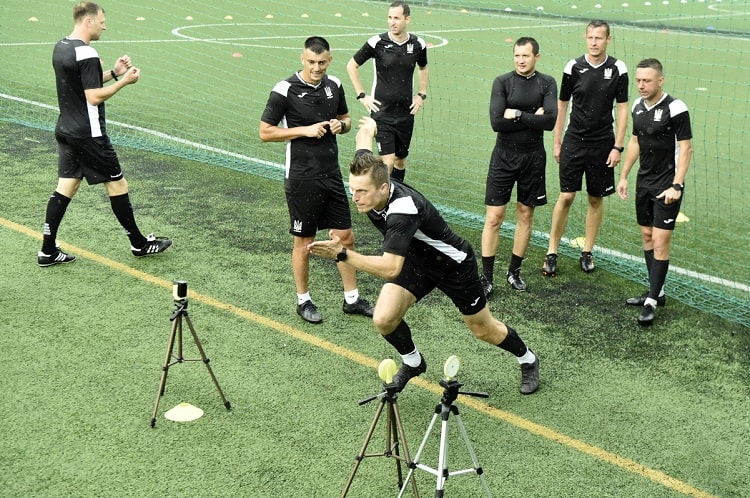
Photo by UAF press service
— Have all referees from the Ukrainian arbitration corps returned to Ukraine and are preparing for the start of the championship?
— We're missing only Sergiy Boyko from the UPL referees. He is with his family on Malta. We don't know if he will return or not. The rest have already returned. Also, some observers who are over 60 and went abroad to their relatives haven't come back.
— What is the situation with referees representing regions occupied by the enemy before February 24? And do you help referees who are fighting for Ukraine on the front lines?
— We have WhatsApp and Telegram groups — groups of UPL, first league, second league, and U-19 referees and assistant referees. We found out about their whereabouts, condition, and needs, then processed the information and weekly reported it to the UAF Coordination Center.
There are many stories. Referee Dmytro Kubryak worked as a neurosurgeon helping our military in Mariupol, now he is in captivity there. Another U-19 referee was also left behind in Mariupol for almost one and a half months from the start of the war. There are examples from Kherson too. Everyone knows about Irina Petrova who was held captive by Russians. Volodymyr Volodin and Igor Pashkal managed to leave Kherson when it was still possible.
UAF Arbitration Committee member Serhiy Lisenchuk served in territorial defense. He was under Bucha during the first days of Russian military aggression. I saw him for the first time during tests. Referee Oleksandr Solovyan now serves in the Armed Forces of Ukraine. He came to take tests in military uniform. There are also many U-19 judges who defended their country with weapons in the early months.
We try to help match officials as much as possible when they need it.
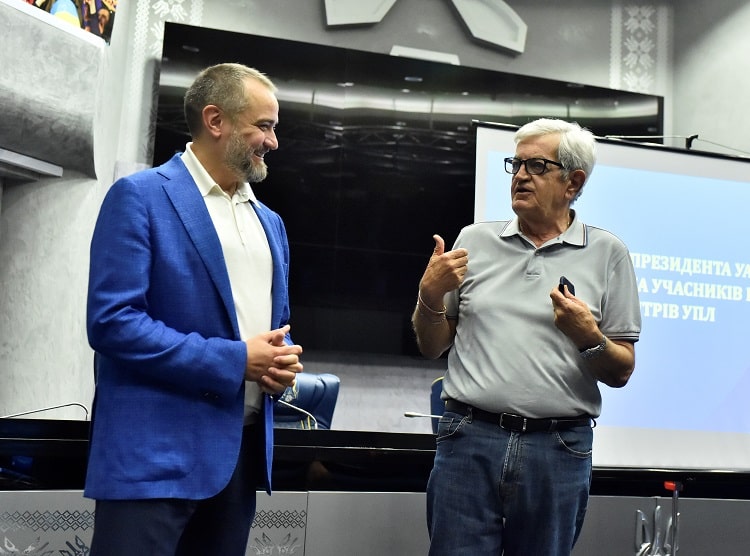
Photo by UAF press service
— Did you personally believe that a Ukrainian football championship could be held under wartime conditions?
— I know Andriy Pavelko very well. I know he would do everything possible and impossible to hold the first match. And I understand President Volodymyr Zelensky's mentality. To normalize civilian life for Ukrainian citizens, this is a matter of honor and dignity.
I believe it's right because football is an integral part of national life. We need to show the world that we are alive and that despite the war, people play football in Ukraine. This moment will be one for which Ukraine can write its name.
— What are the main challenges the UAF Arbitration Committee faces in preparing for the upcoming championship?
— We have a security protocol. We're ready to react to any circumstances. Referees understand the situation well and approach preparation for the new season very responsibly.
It's quite difficult to gather and process information about match officials. It takes a lot of time. To assign a referee or assistant referee, you need to know where they are physically located. Information changes almost daily. If someone from Kherson lives in Lviv now, there are numerous logistical and organizational issues to consider.
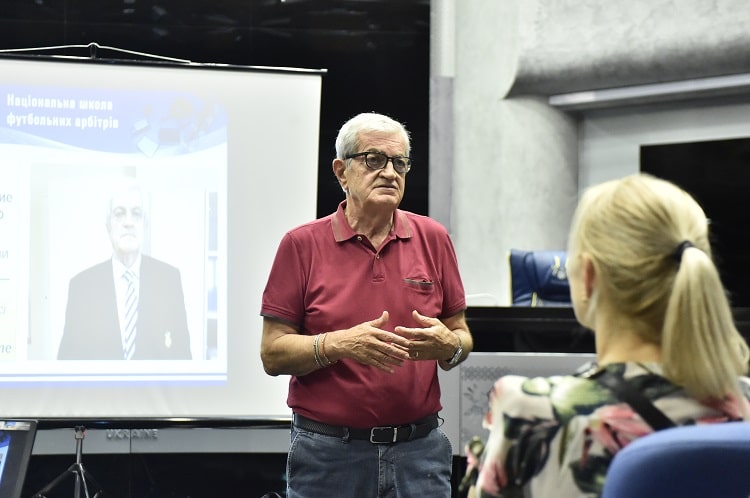
Photo by UAF press service
— What is the situation with VAR and how will the system be presented in matches of the Ukrainian Premier League?
— In each round, the UAF's VAR work commission will select one match. One match per round will be paid for by the UAF.
According to a new regulatory provision, clubs can apply to the Ukrainian Premier League or UAF to order the video assistant referee system. Both the van and the VAR referees.
A whole procedure has been developed, and if clubs want more VAR presence at matches, they will be able to order it in advance for certain games.
— Andriy Pavelko called the upcoming Ukrainian championship unique — the first in history to take place during a war. What reputation value does it have for Ukraine?
— This will be an exceptional success. On August 23, there will be a match between "Shakhtar" and "Metalist 1925". And I'm sure it will be watched around the world. People still don't believe: in Ukraine, war is going on, yet top-level football competitions are starting. This championship will bring significant success to Ukraine's image.
Our football referees will work at these matches. I hope they make as few mistakes as possible. But everyone makes mistakes. And I appeal to all participants of the football process — referees, teams, players, coaches, journalists and fans — to have a higher level of understanding and patience. Now is not the time for heated debates over referee errors. Today more than ever, Ukrainians need to be united.
Read also


