


"Open Football Lessons" in Kagarkhychi near Kyiv Oblast
The socially-sports project "Open Football Lessons" of the Ukrainian Association of Football and the Kyiv Union of Football Associations took place at the sports complex stadium in Kagarychychyna.

Photo KOAF
The social-sports project "Open Football Lessons" of the Ukrainian Association of Football and the Kyiv Union of Associations of Football took place at the sports complex stadium in Kagarlychchina. 72 students from the Kagarlych community participated in the event.
The opening of the festival was attended by Deputy Mayor of Kagarlych, Ihor Budyuk, Head of Education Department of the City Council, Nadiya Omelchenko, Head of Youth and Sports Department of the City Council, Anastasiia Ivanuta, and regional coordinator of the project from KOAF, Volodymyr Maslov.
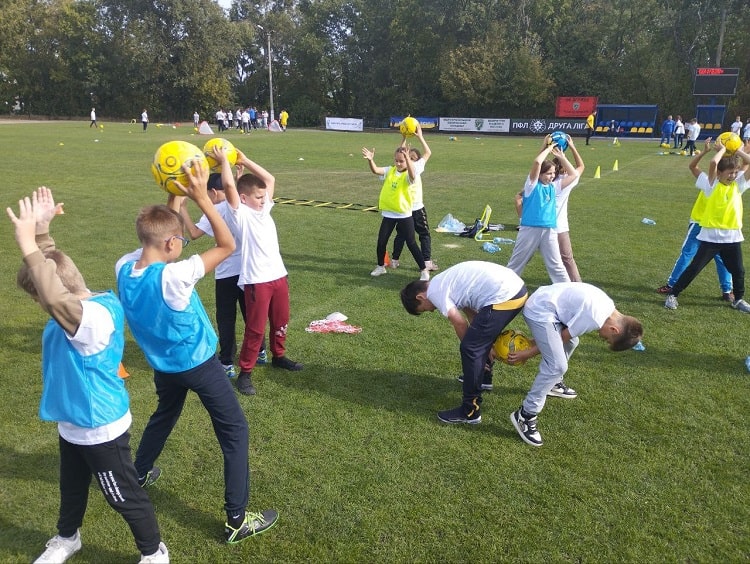
Photo by KOAF
Nadiya Omelchenko greeted the participants of the festival and thanked the Ukrainian Association of Football for providing Kagarlych community with an opportunity to hold the festival here.
The festival began with a warm-up, which was conducted by students from Kagarlych Lyceum No. 3. After that, participants of "Open Football Lessons" and their mentors dispersed to different locations.
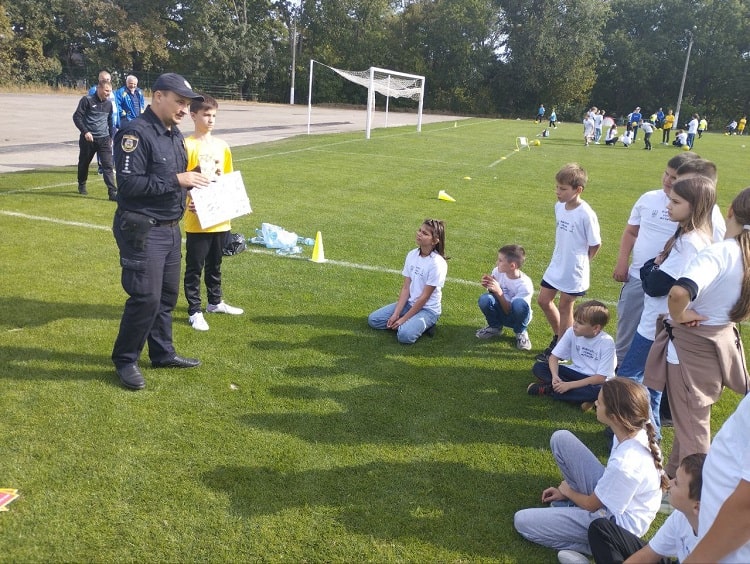
Photo by KOAF
"Open Football Lessons" is a social project of the Ukrainian Association of Football, said the festival's coordinator in Kyiv region, Volodymyr Maslov. "The project is implemented every time in a different city as its organizers strive to ensure that children from new communities participate each time. This time, the festival came to Kagarlych. The goal now is for war-affected children and internally displaced children to socially and psychologically adapt."
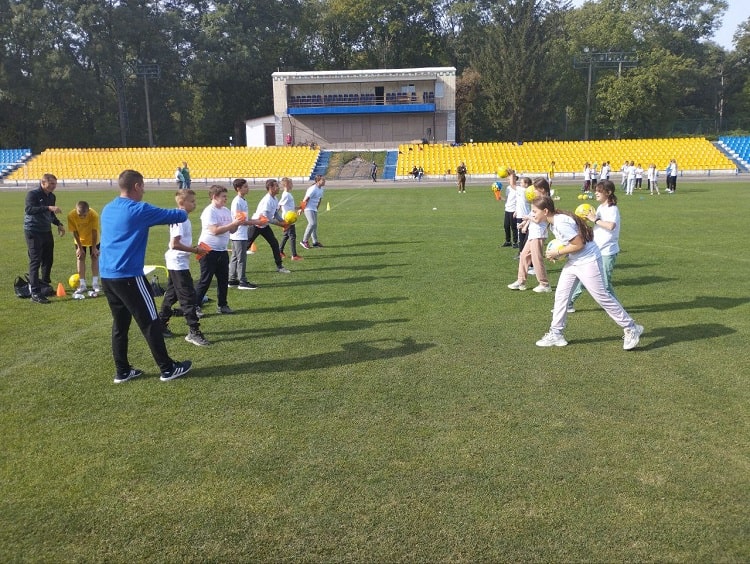
Photo by KOAF
Volodymyr Maslov noted that 72 children from Kagarlych and 12 volunteers — physical education teachers, coaches of the Kagarlych Children's Sports School, and their assistants — young leaders are participating in the festival. The children are divided into six teams which will rotate through six square locations with different focuses.
Director of Kagarlych Children’s and Youth Sports School, Roman Svyrydchenko, said that the Ukrainian Association of Football provided participants with sports equipment and gear which will remain with them after the event for further development of sports.
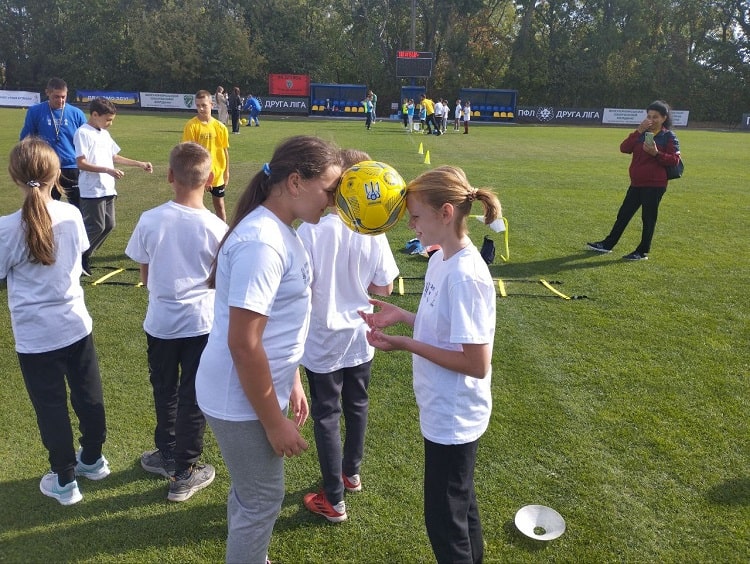
Photo by KOAF
In total, as Roman Svyrydchenko noted, all six teams will visit the following locations:
1. Safety Square. Here, staff from Kagarlych Police Department talk about rules of dealing with explosive items and how to avoid violations.
2. Psychologist's Square.
3. Healthy Lifestyle Square. Sports equipment is involved here, and its supervisor talks about what boosts our immune system and what weakens it.
4. A square where children are shown various sports exercises and football game elements.
5. Square of diverse football relays.
6. Football training square. Here, too, games and exercises with football balls take place. And the children play football.
Roman Svyrydchenko added that the goal of the festival is for children to get a break from events, unite among themselves. As the festival involves children not only from Kagarlych but also from villages in the community, organizers divided them into different teams to introduce and improve communication between children.
The Ukrainian Association of Football's project "Open Football Lessons" (Open Fun Football Schools) supported by UEFA is:
- psychosocial support for children of the Armed Forces of Ukraine, internally displaced children, and war-affected children;
- unity and friendship between IDP children and local children, social integration;
- inclusive environment where participants are independent of their abilities, gender, as well as inclusion of children with special educational needs;
- safety knowledge in wartime conditions;
- philosophy of mass football — joy from the game instead of any price for results;
- development of a healthy lifestyle;
- volunteer development;
- activation of local communities through intersectoral networks (teachers, coaches, psychologists, safety experts, parents, youth leaders, local authorities, benefactors, etc.).
All project events are held in regions with the consent of regional military administrations.


